

The Kubernetes crew at Canonical is delighted to announce that Canonical Kubernetes 1.23 is now generally available. The team is committed to releasing in tandem with upstream so our users and customers can benefit from the latest features and improvements as soon as they become available. This blog is a quick introduction to Canonical Ku

Our on-going documentation transformation project aims to make our documentation the best it can possibly be – an exemplar of excellence for the industry. We’re working on four distinct pillars of documentation to achieve this. The first of these pillars is direction. It defines what is quality in documentation, and answers the question:

Canonical and Advantech have collaborated to help enterprises accelerate Edge AIoT Applications with Ubuntu 20.04 LTS certified on the EPC-U3233, powered by an 8th Gen Intel® Core™ i series processor. This compact fanless embedded PC facilitates data-intensive computing in IoT edge applications. By certifying the Advantech’s EPC-U3233 fo

Learn more about DDS, and how to stay protected while using it If you are currently running the Robot Operating System 2 (ROS 2), this piece is especially relevant to the security of your robots. A few weeks ago, a group of security researchers reported 13 security vulnerabilities affecting some of the most used implementations

2022 is right around the corner, and it’s not just time to prepare for Christmas, play video games, buy presents, or share anti-Christmas memes. It’s time to start making some predictions for bare metal Kubernetes! Take a minute and let’s think about it. Developers have advent of code so they’re busy right now. Sysadmins and

Strategic collaboration designed to offer enterprises a seamless path from their evaluation kits development to production for IoT devices across multiple Xilinx device families December 14, 2021: Canonical and Xilinx Inc. announced today the publication of Ubuntu images optimised for Xilinx Zynq UltraScale+ evaluation boards and the prod

A Data Pipeline is a series of processes that collects raw data from various sources, filters the disqualified data, transforms them into the appropriate format, moves them to the places you want to store them, analyzes them, and finally presents them to your audience. As we can see in the chart above, a data pipeline

With rising unit shipments and hardware spending, 2021 will go into the record books as a critical year in the ever-increasing adoption of connected devices. Ubuntu – the modern, open-source Linux operating system for the enterprise server, desktop, and cloud – is rapidly becoming the de-facto standard for Internet of Things ( IoT) device

Newsletter signup
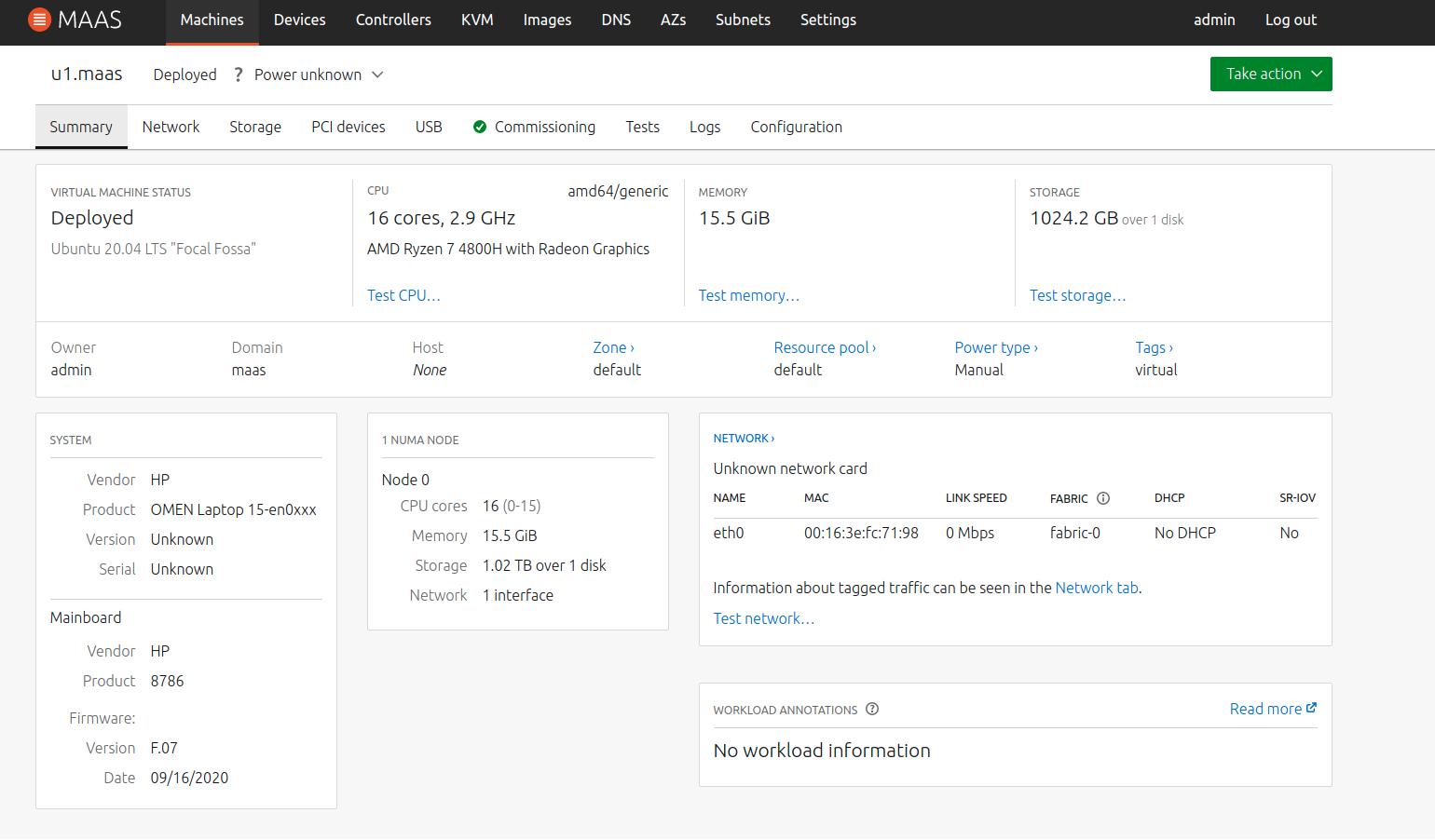
Back a few months ago, we did a feature poll on our MAAS forum, and the most-requested new feature turned out to be “Recommission/rescan a machine after it has been deployed“. With the release of MAAS 3.1, we’ve added that feature, making MAAS an even better choice for linux deployment tools. Here’s a sample of
Learning how to fly. Again. Because certain technologies and processes can always be optimized. Take laptops, for instance (I always wanted to become a laptop designer!). From foldable screens to computers that incorporate e-readers, we are always pushing for new designs that address ergonomic requirements but also improve the way we work

Windows Subsystem for Linux for data scientists Ubuntu is the number one choice for data scientists worldwide. It is also by far the most popular Linux distribution used on public clouds with machine learning offerings. However, we don’t forget about our Windows friends – many of whom had their operating system chosen by corporate IT

Welcome to the second in our series of Linux gaming posts in the run up to the holidays. This week, we’ve put together a tutorial that teaches you how to create a basic Minecraft Server on a Raspberry Pi with Ubuntu Desktop, so you can play locally with your friends. This is a great afternoon

We cover what Flutter’s latest Firebase announcement means for desktop developers and how to get started with Flutter on Ubuntu Desktop.

This blog is the last part of a series – don’t miss parts one and zero. We’re on a mission to demonstrate OpenVINO™ on Ubuntu containers; from the consistently outstanding developer experience to the added trust to your software supply chain. In this blog, I’ll guide you on your way to building and deploying an

We at Canonical, the company behind Ubuntu, are pleased to join hands with the Magma Foundation. Magma connects the world to a faster network by providing operators an open, flexible, and extendable mobile core network solution. Its simplicity and low-cost structure empower innovators to build mobile networks that were never imagined befo

We are happy to announce that MAAS 3.1 has been released. Bare metal provisioning just got even easier! MAAS 3.1 brings some of the most frequently-requested features into the product. A lot of this is serendipity — or maybe you could say that it’s about like minds tracking the same problem. Either way, we’re doing
Ubuntu tech blog
Deep dives for developers
Visit the Ubuntu Tech Blog for deep dives into product features, step-by-step tutorials, and the latest updates from Canonical's engineering teams.